

I know it’s been a little while since our last blog post. The truth is, I’ve been busy helping other business owners get their trucking companies off the ground—consulting, strategizing, and guiding them based on their vision of where they want to take their operations. Between that, meeting new people, and exploring exciting opportunities, my publishing schedule slipped a bit. But I’m back—and today we’re diving into one of the most important steps in launching a successful trucking business: getting your DOT number and MC authority.
These two pieces are the cornerstone of your operating authority, and getting them right from the beginning sets the tone for a smooth and compliant start.
In this post, you’ll learn:
- The difference between DOT and MC numbers—and when you need them
- Why forming a business entity like an LLC is the essential first step
- How to apply for your DOT and MC numbers the right way
- What safety and compliance filings are required after you’re approved
- How to avoid common mistakes that cost time and money
- What to expect during the 21-day waiting period
- The importance of being ready for the FMCSA’s new entrant audit
- How Northstar Consulting Group can help you manage safety, compliance, and setup—all under one roof
Whether you’re just starting your trucking company or trying to make sense of federal requirements, this guide will walk you through the entire process with clarity and confidence. Let’s get started.
Why DOT and MC Numbers Matter
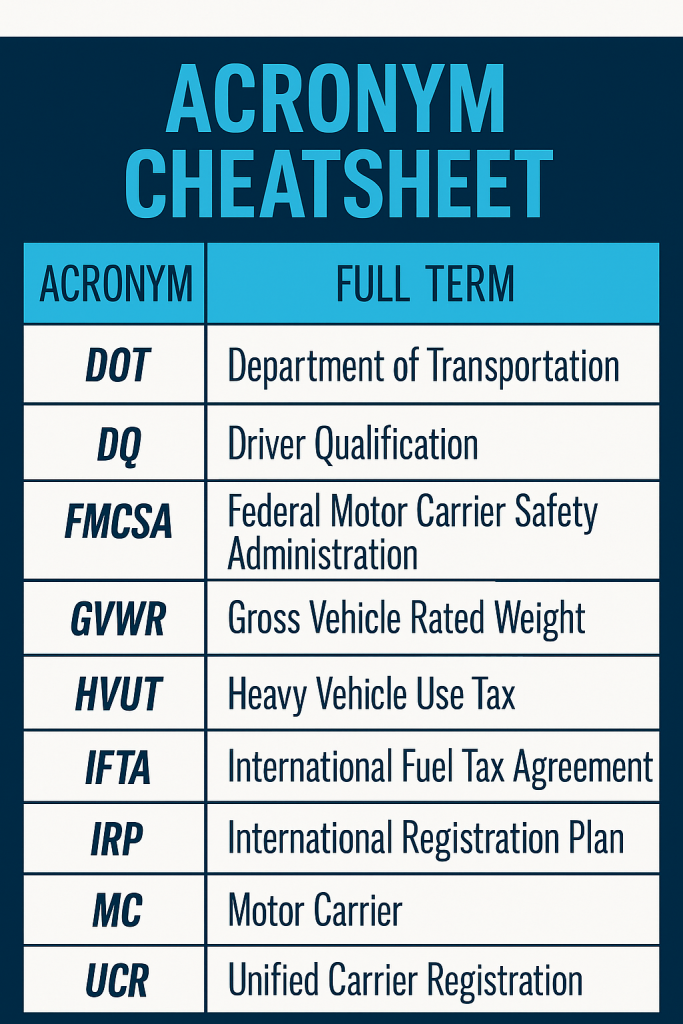
Before you can legally operate as a motor carrier, you must register with the Federal Motor Carrier Safety Administration (FMCSA). This registration involves getting two key credentials: a DOT number and MC authority. The DOT number is used to track your company’s safety and compliance record, while the MC authority gives you the legal right to transport freight for hire across state lines. If you’re planning to run a for-hire trucking business that crosses state borders, both are essential.
Here are some acronyms defined to make things easier:
When You Need a DOT Number
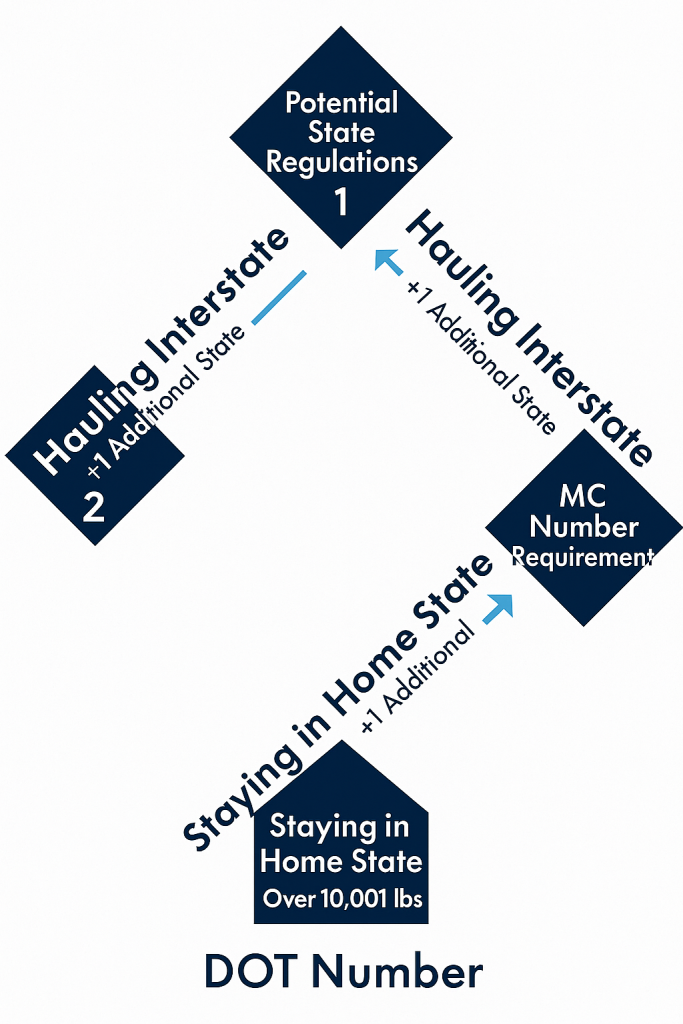
A DOT number is required when your vehicle meets certain criteria. If your truck or combination of truck and trailer has a gross vehicle weight rating (GVWR) over 10,000 pounds, if you’re engaged in interstate commerce, if you transport hazardous materials, or if you’re carrying more than eight passengers for pay, you’ll need a DOT number. Even private carriers moving their own goods—like large retailers—must have a DOT number under these conditions.
When You Need an MC Number
While the DOT number is focused on safety and tracking, the MC number is what grants you the authority to operate for hire. Specifically, if you’re crossing state lines and hauling someone else’s freight for compensation, you need an MC number. Companies that operate only within their home state or only haul their own goods typically don’t need this. However, most new entrants into the trucking industry plan to haul freight across multiple states, which makes both numbers necessary.
Step 1: Establish Your Legal Entity (LLC or Corporation)
The first foundational step before applying for your operating authority is to set up your business structure. Forming an LLC or corporation not only legitimizes your company, but also protects your personal assets. With this setup, you’re creating a legal separation between your business and your personal life—something you’ll be thankful for should any legal or financial issues arise down the road.
You’ll need to file your Articles of Incorporation with your state and apply for an Employer Identification Number (EIN) through the IRS. These are the “birth certificate” and “Social Security number” for your business, and they’re required for nearly every step that follows.
Resources for More on Establishing your LLC or Corporation:
Choosing the Right Business Entity for Your Trucking Company
Avoid These Costly LLC Mistakes
Step 2: Apply for Your DOT and MC Numbers
Once your business structure is in place, it’s time to apply for your DOT and MC numbers through the FMCSA. Although these numbers are issued immediately, your MC authority won’t go active for 21 days. This is a government-mandated vetting period, and during that time, you’ll need to complete a few critical steps: submitting your proof of insurance and filing a BOC-3 form (which designates a legal agent in every state).
It’s best to wait until around day 14–18 to activate your insurance policy. Otherwise, you could be paying for 21 days of insurance coverage without being able to legally operate—an unnecessary expense. Once the waiting period ends and your filings are complete, your authority becomes active and you’re ready to roll.
Step 3: Understand Your Compliance Responsibilities
Now that you have your DOT and MC numbers, you’ve officially entered the world of federal regulation and oversight. From here, staying in compliance is not optional—it’s required.
You must register with the Unified Carrier Registration (UCR) system every year if you’re operating across state lines. If you don’t have your UCR filing in place, you could be pulled over, fined, and placed out of service at a port of entry or weigh station. This is just one of several safety and compliance obligations you’ll need to stay on top of.
Compliance doesn’t stop there. You must also participate in a Drug and Alcohol Testing Program if your vehicle exceeds 26,001 pounds—even if you’re the only driver. You’ll be required to take a pre-employment drug test and enroll in a random testing consortium. This is in addition to the DOT physical required for drivers of commercial vehicles over 10,001 pounds.
If your truck weighs over 55,000 pounds, you’ll also need to pay an annual Heavy Vehicle Use Tax (HVUT) to the IRS.
Let’s be clear: safety and compliance are absolutely critical. Failing to meet any of these requirements can get you shut down—fast. That’s why at Northstar Consulting Group, we don’t just help you get your DOT and MC numbers. We also offer complete Safety and Compliance management services, from drug consortium enrollment and UCR filings to audit prep and ongoing support. We’re here to make sure you stay compliant and confident. Give us a call or email us.
Step 4: Prepare for the New Entrant Safety Audit
Within your first year of operating, the FMCSA will perform a mandatory safety audit. You will need to show proof of insurance (via your MCS-90 form), driver qualification files, inspection records, logbooks, and more. We recommend keeping a well-organized nine-folder system that includes everything the auditor will request. If you are prepared, this audit will take less than an hour. If you’re not, it could become a multi-day nightmare.
Avoiding Common Mistakes
Many first-time carriers try to do all of this themselves—and end up paying the price. One of the most common and costly errors is applying for the wrong type of authority. The FMCSA website isn’t always intuitive, and selecting the wrong box can mean applying for a freight forwarder license instead of general carrier authority. In some cases, we’ve seen people pay triple the standard government fee ($300) on third-party sites, only to end up with nothing useful. Save yourself time and money—get it done right the first time.
What Happens After You Apply? Prepare for the Spam Storm
As soon as you hit submit on your DOT/MC application, your phone will light up like a Christmas tree. Your contact info becomes public, and dozens of sales calls, emails, and even snail mail letters will start rolling in. Some will pretend to be government agencies. Some will offer unnecessary services. It’s overwhelming—but we can help you filter the noise. When you work with Northstar, you can tell them: “My safety and compliance team is handling it.” And we will.
Final Thoughts
Getting your DOT number and MC authority is a big milestone—and it’s only the beginning. Doing it right means understanding not just the process, but also the responsibilities that come with it. With so many moving parts, it’s easy to overlook something critical and pay for it later.
At Northstar Consulting Group, we’re here to help you build your business with confidence. From setting up your LLC to passing your safety audit, we offer the experience, tools, and support to help you stay legal, efficient, and profitable.
If you’re ready to start—or struggling with compliance—reach out. We’re here to help you get it right the first time. Contact us here.
Related posts:
 How to Keep Your Business Financially Sound
 How to Start Your Own Trucking Company: A Three-Part Series – Part 2: Securing Funding for Your Trucking Business
 Choosing the Right Business Entity for Your Trucking Company: A Step-by-Step Guide (P1)
 Understanding Tax Structures and Protecting Your Assets in the Trucking Industry (P2)
 The Most Overlooked Cost in Trucking Happens Before the Truck Even Moves